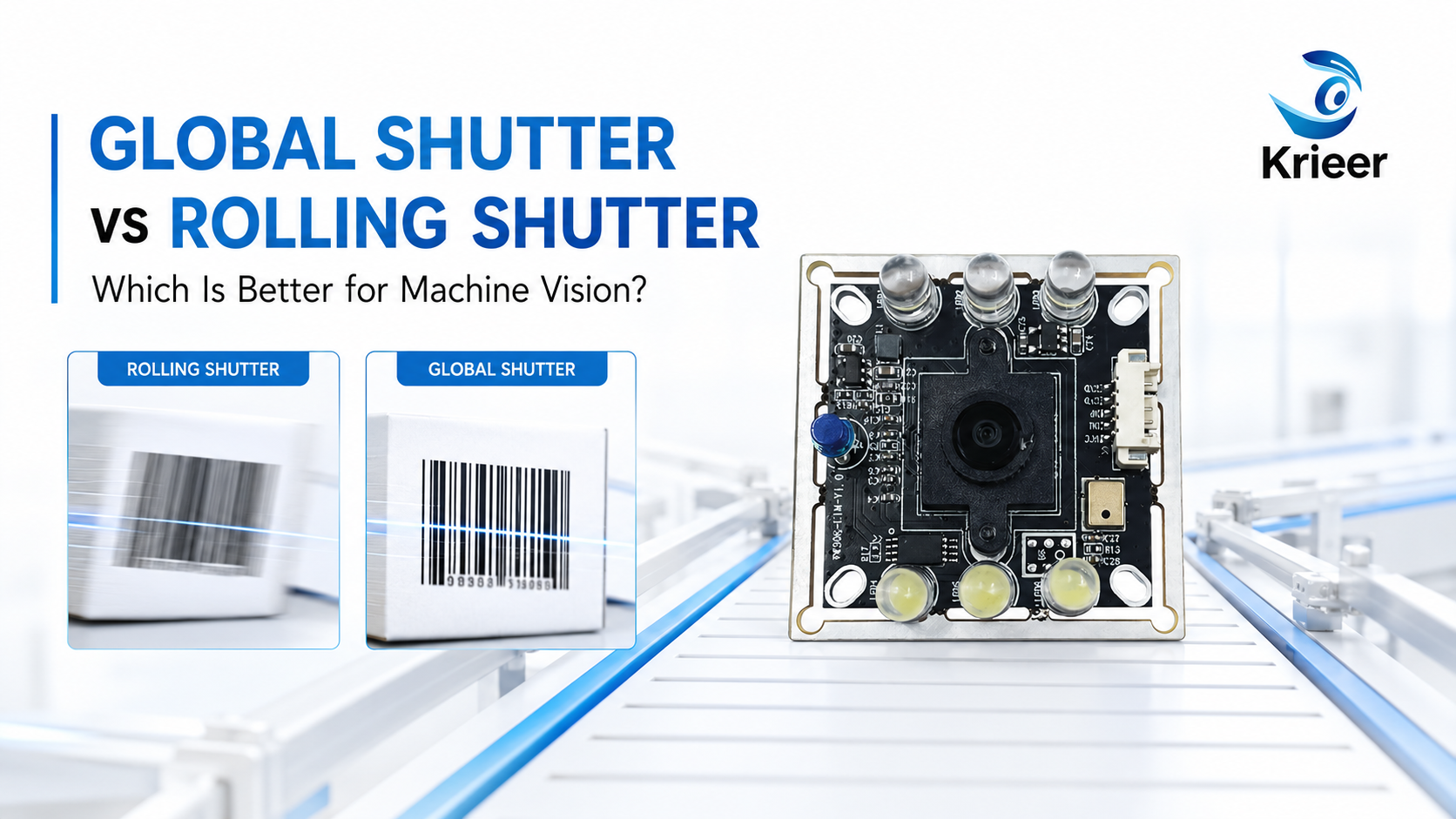
In machine vision, resolution is not the only factor that determines image quality.
A high-resolution camera can still produce unusable images if moving objects appear tilted, stretched, or blurred. This is why shutter type is important when selecting a camera module for industrial inspection, robotics, barcode scanning, automation equipment, and other machine vision applications.
The two common options are global shutter and rolling shutter. Which one should you choose?
A rolling shutter sensor captures an image row by row. The top and bottom of the frame are recorded at slightly different moments.
This usually works well when the camera and target remain stationary or move slowly. Rolling shutter sensors are widely used in webcams, smart terminals, document scanners, video conferencing cameras, and general embedded devices.
However, when the object or camera moves quickly, rolling shutter may cause:
These problems can affect recognition, measurement, positioning, and inspection accuracy.
A global shutter sensor exposes all pixels at the same time. Therefore, the entire frame represents the same moment.
This significantly reduces the geometric distortion caused by movement, making global shutter cameras more suitable for:
When accurate shape, position, or timing is important, global shutter is generally the safer choice.
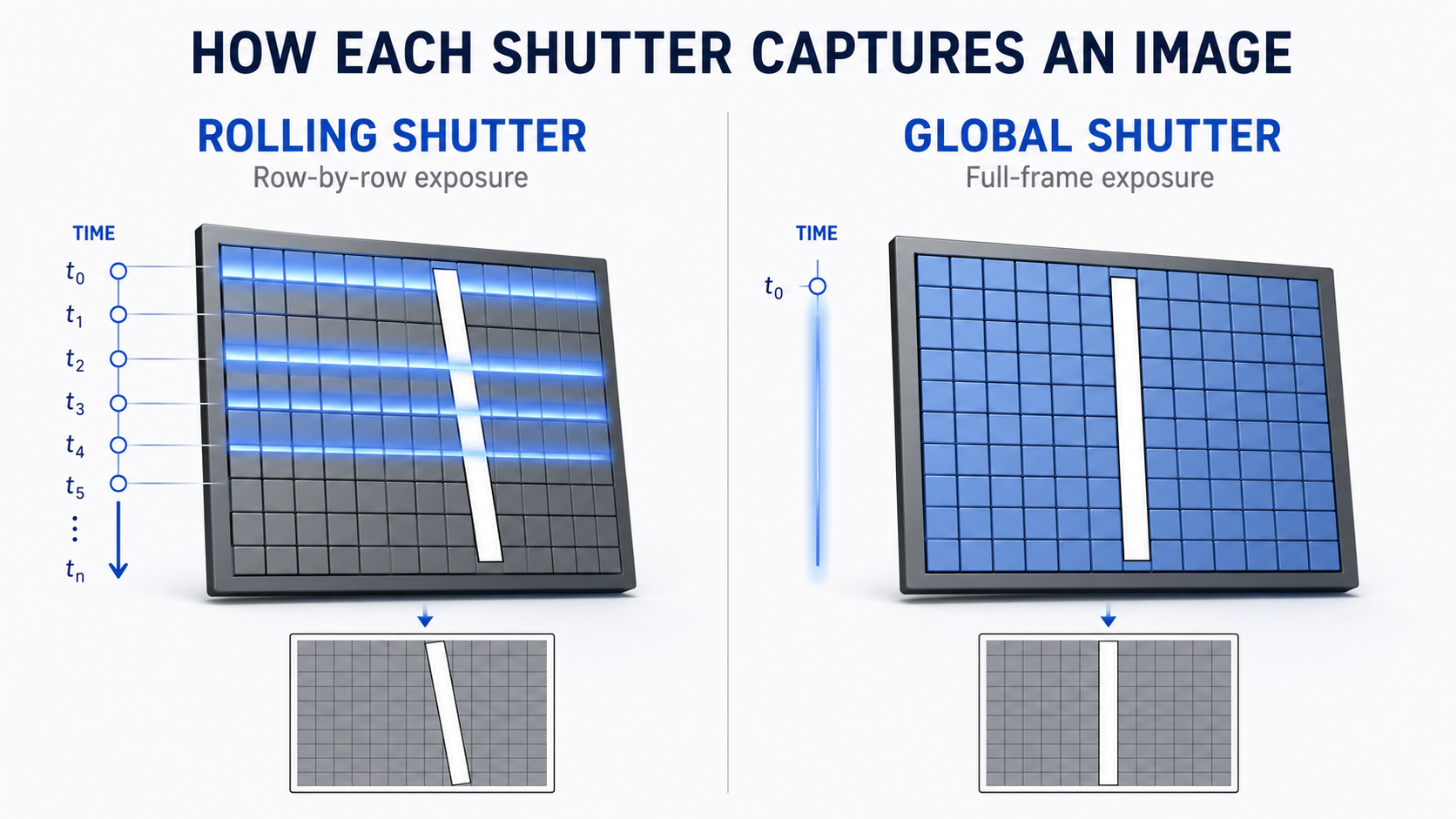
| Comparison | Global Shutter | Rolling Shutter |
|---|---|---|
| Capture method | Entire frame exposed simultaneously | Image captured row by row |
| Moving-object distortion | Very low | May occur during movement |
| High-speed capture | More suitable | Better for slow or static scenes |
| Measurement accuracy | More reliable for moving targets | Suitable for stationary targets |
| Cost | Usually higher | Usually more economical |
| Sensor options | More limited in some resolutions | Wider range of options |
| Common applications | Robotics, inspection and automation | Terminals, scanning and general imaging |
Neither option is better in every application. The correct choice depends on movement speed, lighting, working distance, accuracy requirements, resolution, and budget.
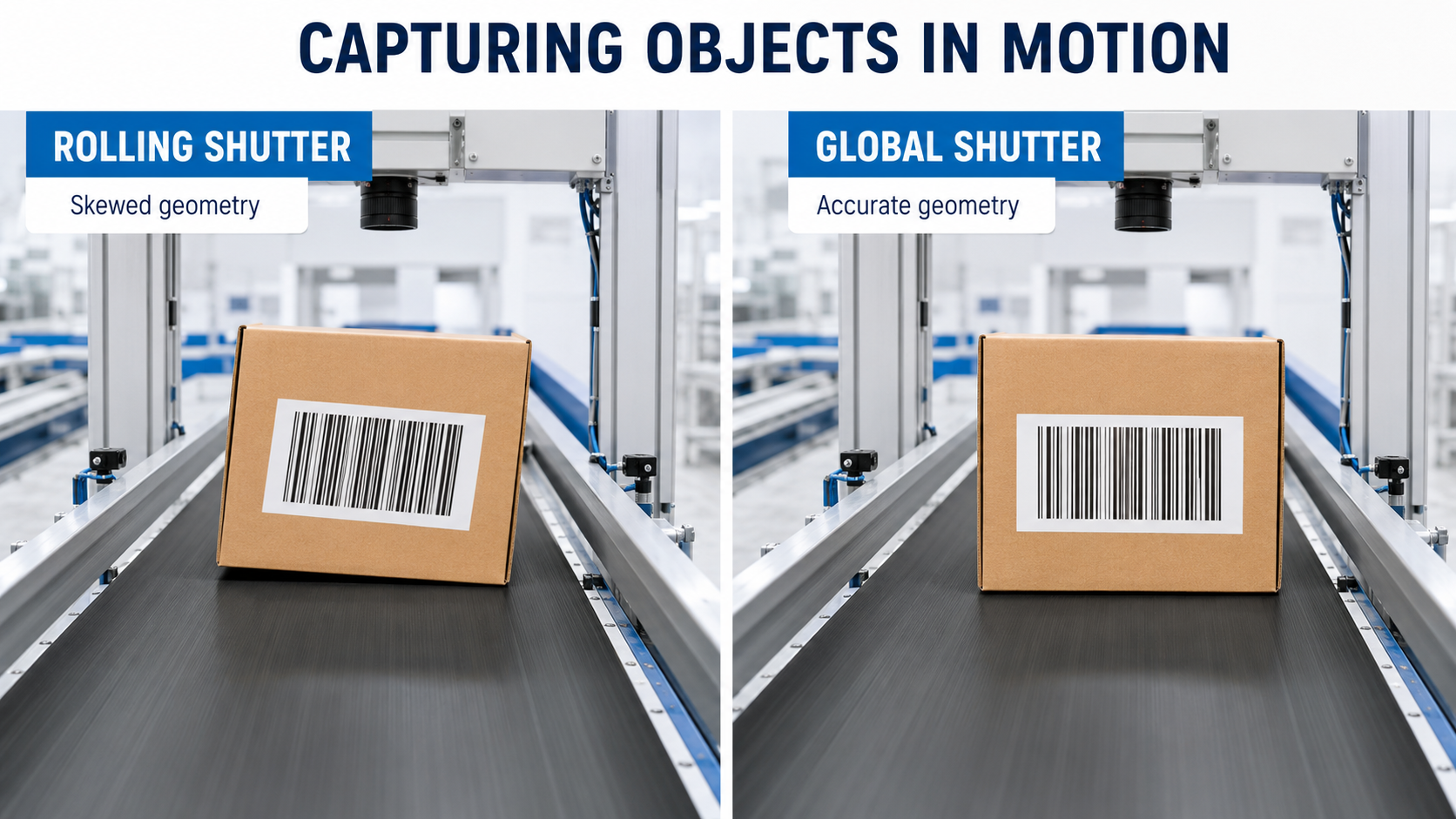
Products moving quickly on a conveyor may appear tilted or distorted when captured with a rolling shutter.
If the system needs to inspect labels, dimensions, components, or surface defects, this distortion may cause incorrect results. A global shutter captures the complete product at one moment, providing more reliable images for analysis.
Robotic arms and mobile robots depend on accurate image coordinates.
When the camera or target is moving, rolling shutter distortion may change the apparent position or shape of an object. This can affect detection, positioning, grasping, and navigation.
Global shutter sensors provide more consistent visual data for these applications.
Rolling shutter cameras can work well when a barcode remains stationary. However, on production lines, warehouse conveyors, or moving AGVs, barcode lines may become tilted or blurred.
A global shutter sensor, combined with short exposure and suitable lighting, can improve recognition reliability for moving packages and products.
Machine vision systems are often used to measure dimensions, alignment, distance, and component position.
Even small geometric distortions may affect the result. If the camera or object moves during capture, global shutter is usually preferred.
Many industrial vision systems use external triggers and short lighting pulses to freeze motion.
Because the complete global shutter frame is exposed simultaneously, it is easier to synchronize with strobe lighting and achieve consistent brightness across the image.
A rolling shutter may still be suitable when:
Common examples include document scanning, face recognition terminals, fixed QR code readers, microscope imaging, equipment monitoring, and static product inspection.
Using global shutter when it is not technically necessary may increase the cost without delivering a meaningful improvement.
Not completely.
Global shutter reduces geometric distortion because the whole image is captured at the same moment. However, a fast-moving object can still look blurred if the exposure time is too long.
Sharp high-speed images also require:
For machine vision applications, the sensor, lens, lighting, firmware, and exposure settings should be evaluated as one complete imaging system.
Before selecting a shutter type, confirm these six points:
Application videos, drawings, sample images, or examples of the moving target can help the camera module manufacturer recommend a more suitable sensor.
Global shutter is generally better for high-speed motion, robot guidance, dynamic barcode scanning, precision measurement, and automated inspection.
Rolling shutter is often sufficient for stationary or slow-moving targets, fixed monitoring, high-resolution imaging, and cost-sensitive equipment.
The best choice should not be based on shutter type alone. Resolution, exposure time, frame rate, pixel size, lens, lighting, interface, and system compatibility must also match the actual application.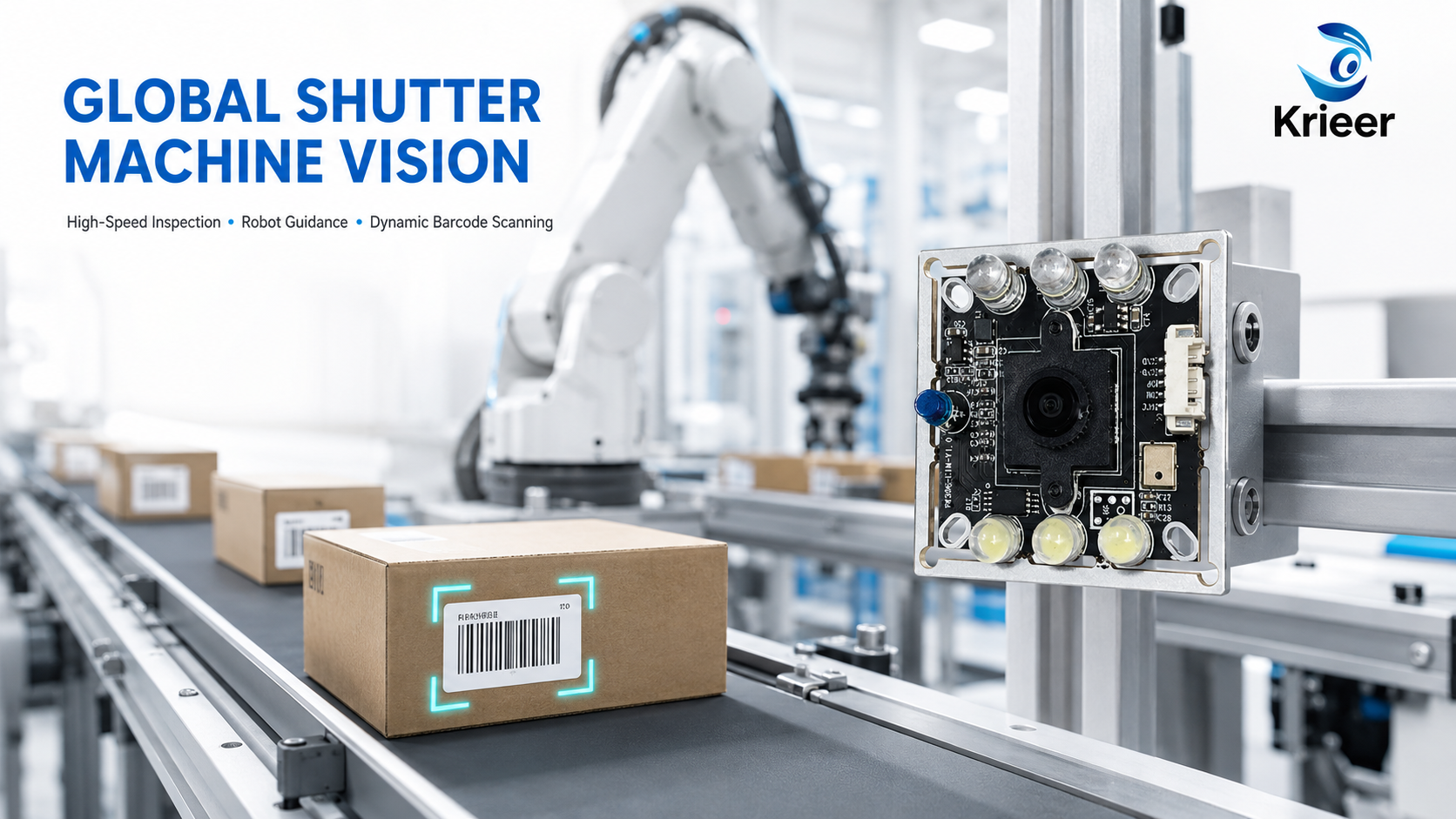
Krieer provides customized USB and MIPI camera module solutions for industrial vision, robotics, barcode scanning, smart terminals, automation equipment, and embedded devices.
Our team can assist with:
Share your application, movement speed, working distance, target size, system platform, and expected quantity. We can recommend a suitable camera module and provide samples for testing before mass production.


