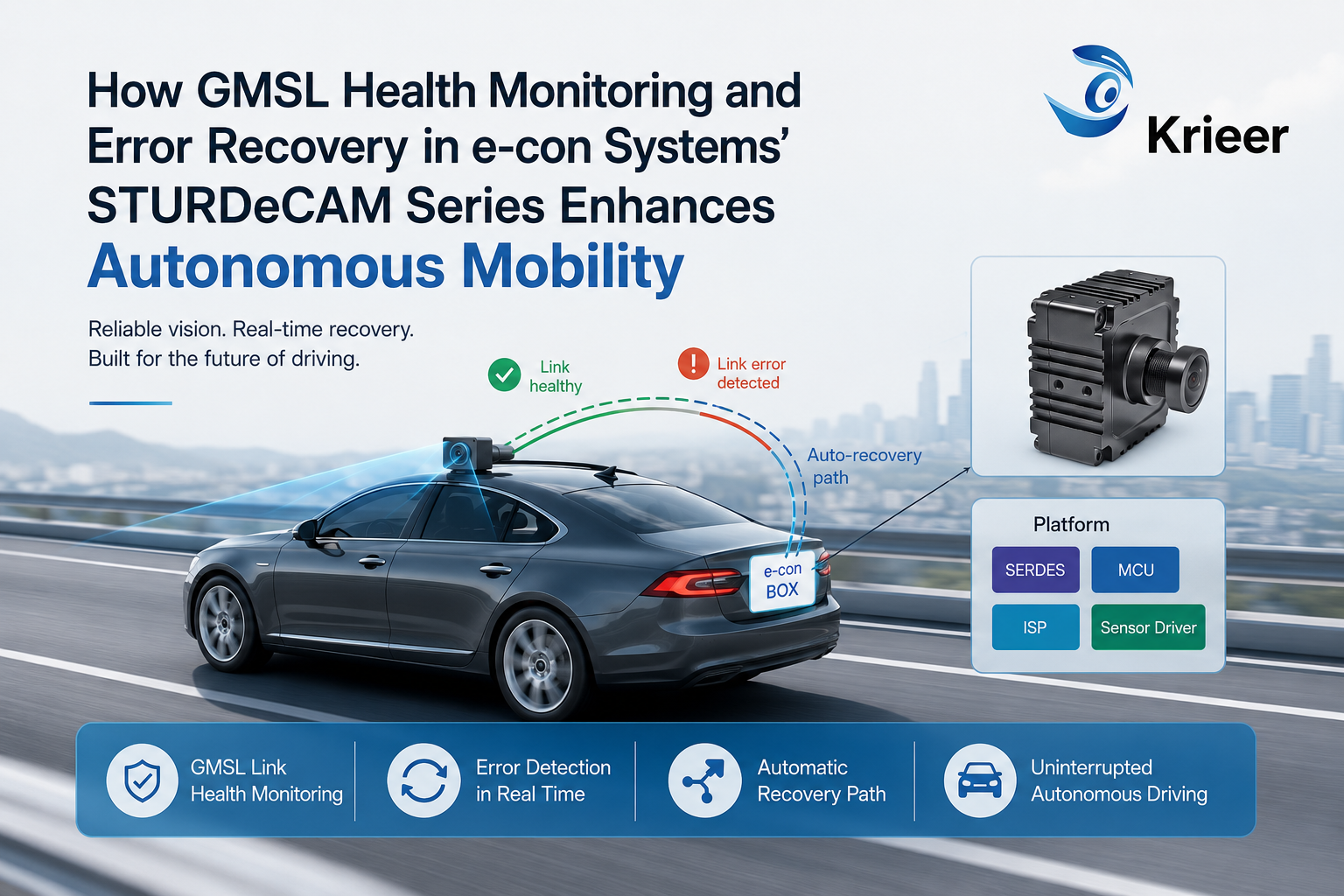
In autonomous vehicles, mobile robots, agricultural machines, and industrial automation platforms, cameras are not just image sensors. They are part of the perception system that helps the machine understand its surroundings and make real-time decisions.
When a camera link becomes unstable, the impact can be serious. A temporary video loss, dropped frames, transmission error, or disconnected camera may affect object detection, navigation, obstacle avoidance, and overall system safety. This is why camera reliability is just as important as resolution, frame rate, and image quality.
For applications that operate in harsh or dynamic environments, GMSL cameras with health monitoring and error recovery capabilities can significantly improve system stability.
Autonomous mobility systems often use multiple cameras for front view, rear view, surround view, blind spot detection, and driver or cabin monitoring. These cameras need to send stable video streams to the computing platform with low latency.
However, real-world environments are not always friendly to camera systems. Vehicles and robots may face vibration, long cable runs, electromagnetic interference, temperature changes, power fluctuations, or connector issues. Any of these factors can affect the camera link.
Without proper monitoring, the system may not immediately know whether a camera is offline, whether the video stream is abnormal, or whether data errors are occurring. This creates risks for perception accuracy and system response.
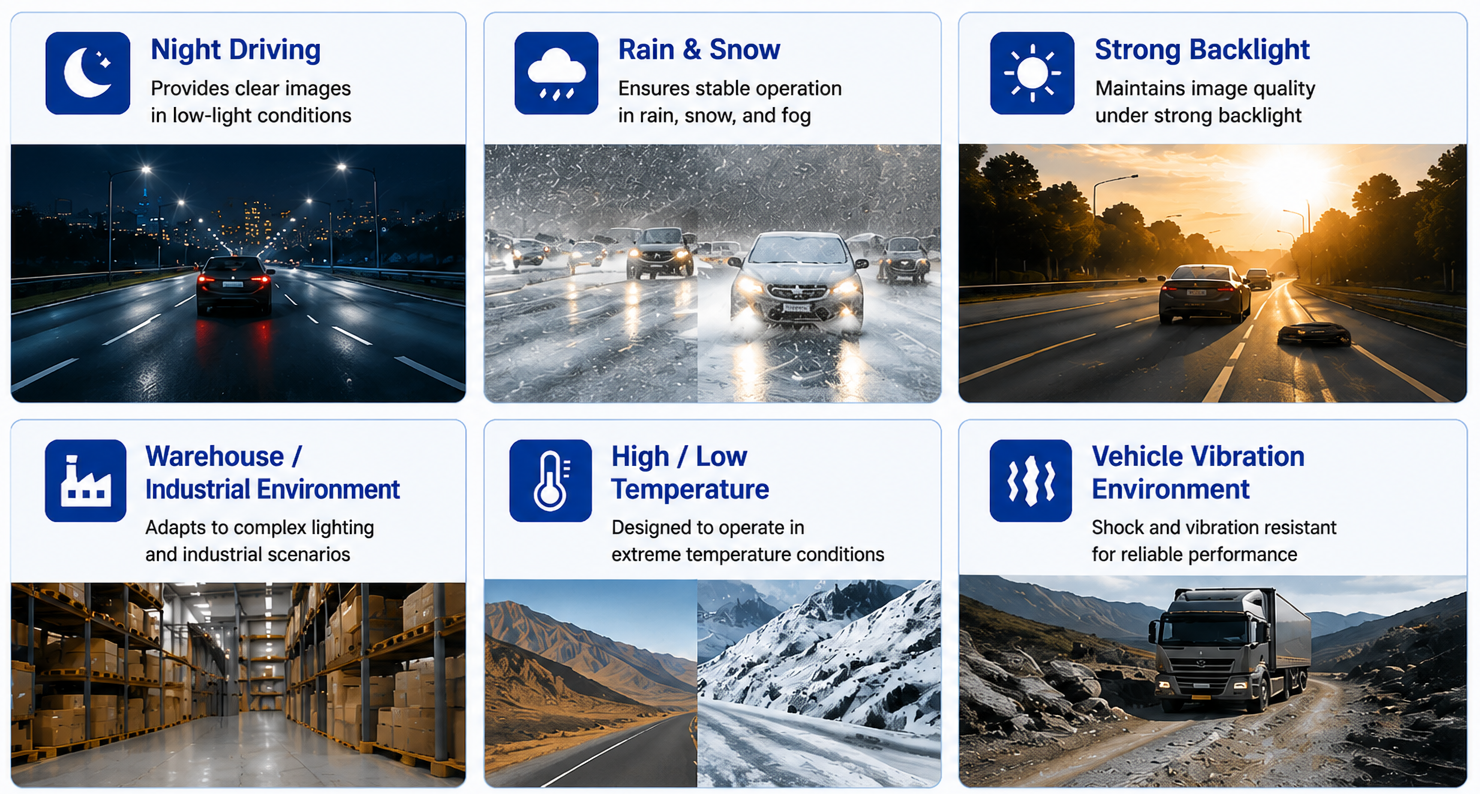
GMSL, or Gigabit Multimedia Serial Link, is widely used in automotive and embedded vision applications because it supports high-speed video transmission over longer cable distances. It is especially suitable for multi-camera systems where stable data transfer and simplified cabling are important.
A well-designed GMSL camera system can support:
These advantages make GMSL cameras a strong choice for autonomous driving platforms, AMRs, delivery robots, off-road vehicles, smart agriculture machines, and industrial mobility systems.
Camera health monitoring allows the host system to continuously check whether the camera and video link are working properly. Instead of waiting for a complete failure, the system can detect early signs of instability.
Typical monitoring items include:
With this information, the system can quickly identify whether a camera is healthy, degraded, or disconnected. This helps developers build safer and more maintainable perception systems.
Detection alone is not enough. In many autonomous applications, the system also needs to recover quickly when an issue occurs.
Error recovery may include restarting the camera stream, reinitializing the link, reconnecting the camera, or notifying the upper-level application. The goal is to reduce downtime and restore normal image transmission without manual intervention.
For vehicles and robots working in the field, this is extremely valuable. It reduces maintenance effort, improves uptime, and helps the system continue operating even when temporary link issues happen.
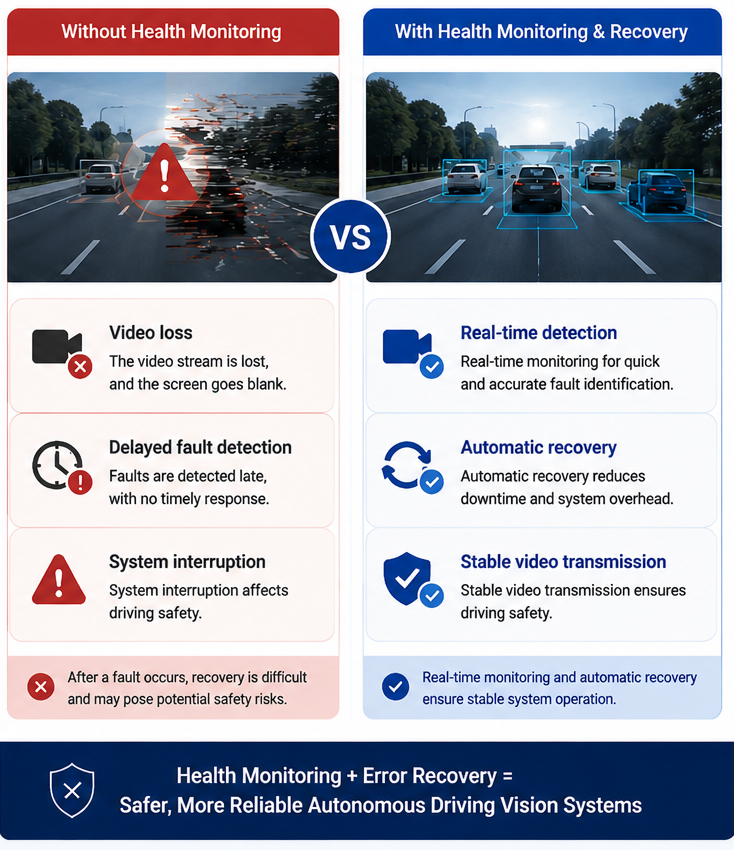
GMSL camera health monitoring and error recovery bring several practical benefits:
For autonomous mobility, a camera system should not only deliver clear images. It should also provide stable, traceable, and recoverable video performance.
This type of camera solution is especially suitable for:
As autonomous mobility moves from testing to real-world deployment, camera reliability becomes a key factor in system performance. GMSL cameras with health monitoring and error recovery features help ensure that vision systems remain stable, responsive, and easier to maintain.
For developers and system integrators, choosing a camera is no longer only about image quality. It is also about building a vision system that can detect problems, recover from errors, and keep operating reliably in demanding environments.
Suggested SEO Title:
Why GMSL Camera Health Monitoring Is Essential for Autonomous Mobility
Meta Description:
Learn how GMSL camera health monitoring and error recovery improve reliability, reduce downtime, and support stable vision systems for autonomous vehicles and mobile robots.


