Camera modules are increasingly used in dental imaging systems, digital microscopes, skin analyzers, telemedicine terminals, examination devices, endoscopic products and other healthcare equipment.
However, a camera module that works well in a consumer product may not be suitable for a medical device.
Medical imaging applications often involve short working distances, limited installation space, controlled illumination and higher requirements for image consistency. Unstable focus, inaccurate color, excessive noise or video delay can affect the performance of the finished equipment.
For medical-device manufacturers, selecting the right camera module should therefore begin with the application—not simply with megapixels or price.
Different medical devices require very different imaging solutions.
A telemedicine terminal may prioritize natural color and smooth video. A dental camera may require a short working distance and strong detail reproduction. A skin analyzer may need consistent color under controlled lighting, while an endoscopic product may place greater emphasis on camera-head dimensions.
Before selecting a module, confirm:
These answers help determine which specifications genuinely matter.
Higher resolution does not automatically mean better medical imaging.
The appropriate resolution depends on the target size, required detail, display, processing platform, frame rate and storage capacity. Full HD may be sufficient for general video consultation or equipment monitoring. Applications that require enlargement or detailed documentation may benefit from 4K or higher resolution.
Resolution should be evaluated together with:
A high-resolution sensor combined with an unsuitable lens may produce a larger image without delivering more useful detail. The sensor, lens and image-processing system should be assessed as one complete imaging solution.
Working distance is one of the most important parameters in medical camera-module selection.
A module designed to focus at one meter may not provide a clear image at 20 millimeters. Similarly, an excessively wide field of view may make a small examination target appear too small on screen.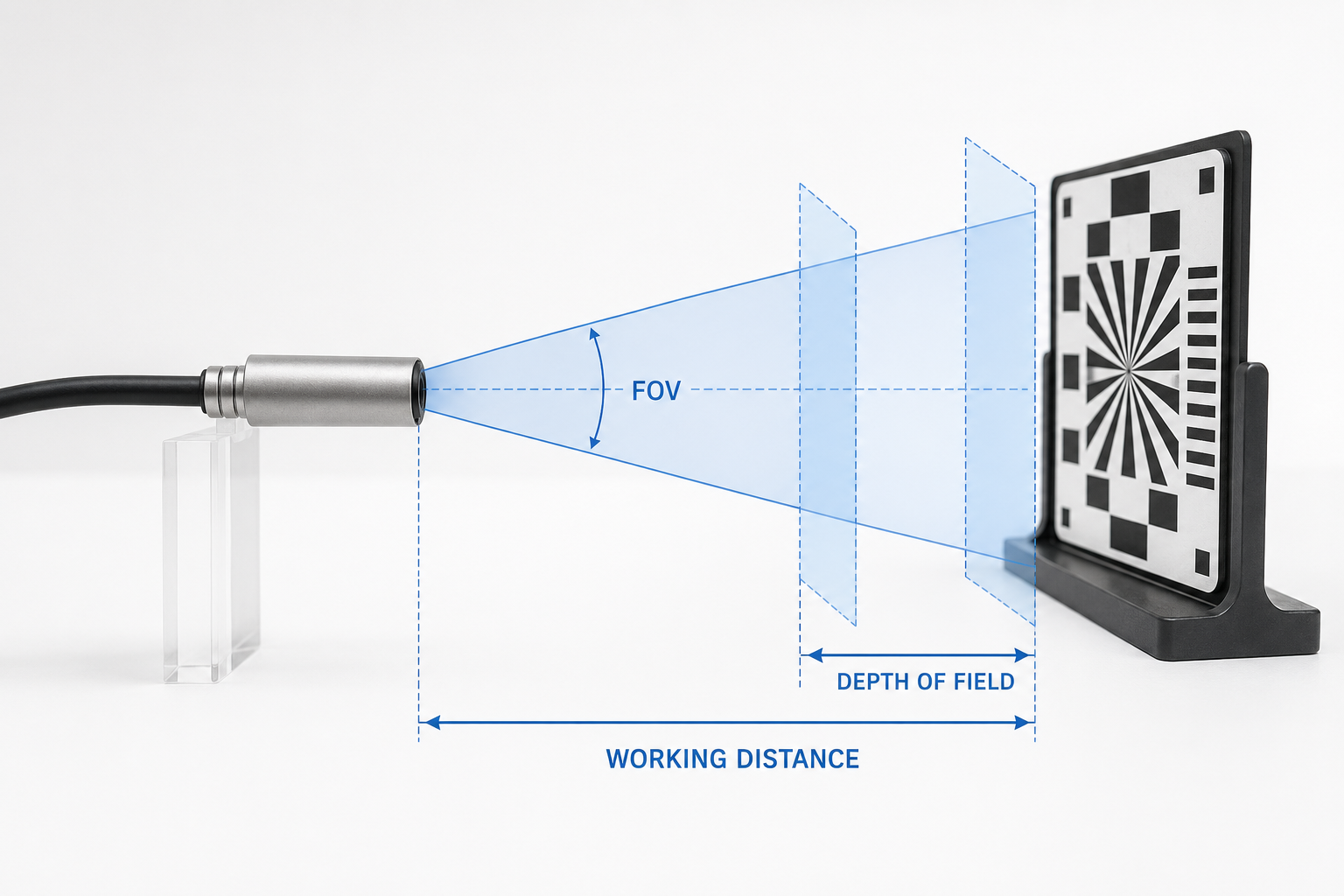
The project should define:
A fixed-focus camera is often suitable when the examination position remains constant. It offers a simpler structure and stable focus.
Autofocus may be more appropriate when the working distance changes frequently. However, its focusing speed, accuracy and stability should be tested using the actual target and lighting conditions.
Medical equipment often provides limited space for the sensor, lens, PCB, cable and illumination system.
Compact handheld instruments and endoscopic products may require a small camera head. Larger medical equipment may instead require a specific PCB shape, mounting-hole position or cable route.
Mechanical design should consider:
The smallest module is not always the best choice. Excessive miniaturization can limit the available sensor and lens options and make thermal management more difficult.
The right module is one that fits the device without sacrificing the required image quality and reliability.
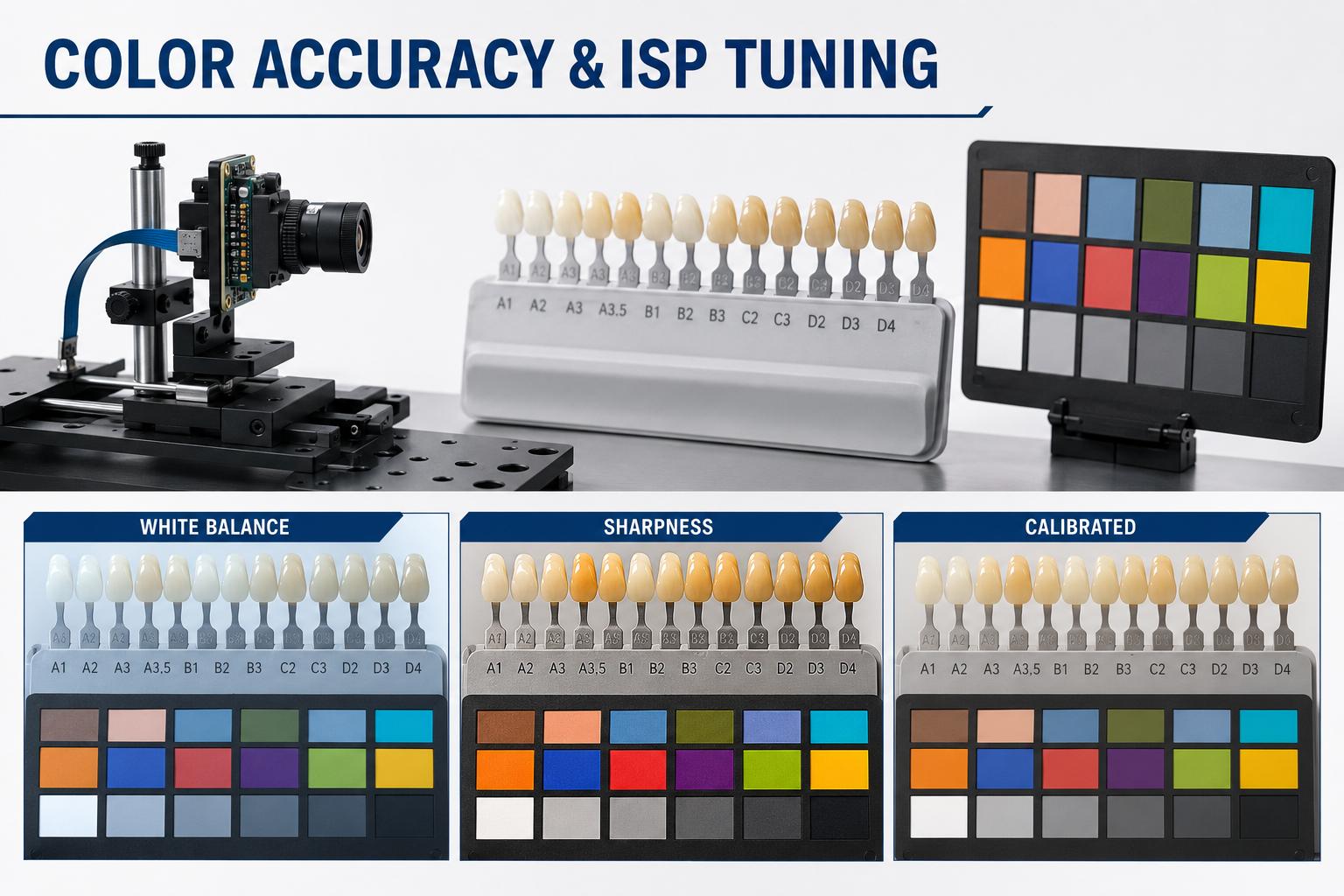
Color reproduction can be important when a device captures skin, teeth, tissue or other subjects with subtle color differences.
Consumer cameras are often adjusted to produce brighter, more saturated and visually attractive images. These settings may not provide the consistency or natural appearance required by a medical imaging application.
Depending on the intended use, ISP tuning may need to optimize:
Testing should use the actual LEDs, optical window, enclosure and target materials of the finished device. Changing the light source or optical cover can significantly alter color and exposure.
When repeatable color is important, fixed or customized image parameters may be more appropriate than relying entirely on automatic settings.
Many medical cameras operate in enclosed spaces or very close to the imaging target. This can create uneven brightness, strong reflections, shadows or insufficient illumination.
Increasing sensor gain may brighten the image, but it can also increase noise. Longer exposure may improve brightness while causing motion blur or reducing the effective frame rate.
Low-light performance depends on several combined factors:
For devices with built-in LEDs, engineers should evaluate illumination uniformity, highlights, reflections and shadows. The camera and lighting system should be tested together rather than treated as separate components.
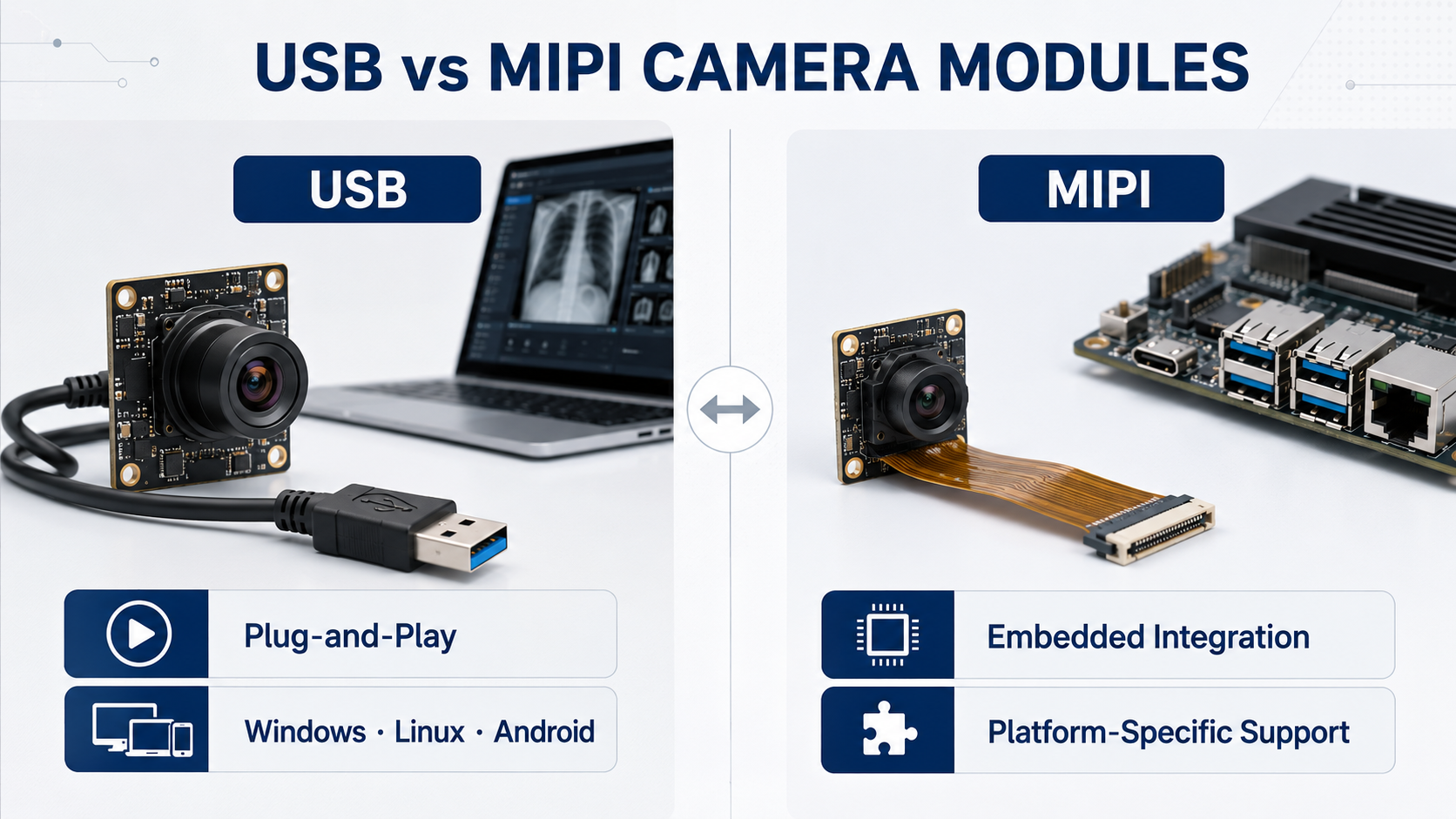
USB and MIPI are common interface options, but they support different product architectures.
USB modules are often suitable for devices using Windows, Linux or Android. A UVC-compatible camera can reduce driver-development work and help manufacturers complete prototypes more quickly.
Before choosing USB, confirm:
MIPI modules are commonly used in compact embedded products where low power consumption and direct processor integration are priorities.
A MIPI project should confirm the exact processor, development board, operating system, MIPI lane configuration, pin definition, driver and ISP support before sampling.
Having the same connector does not guarantee compatibility. Platform information should be shared with the camera-module supplier as early as possible.
A camera that produces a good image on an engineering test board may perform differently after being installed in the final equipment.
The enclosure, optical window, LEDs, processor, power supply, cable and internal temperature can all affect performance.
Prototype verification should cover:
Testing should be completed inside the real enclosure. An optical window may introduce reflections, reduced sharpness or color changes that are not visible during open-board testing.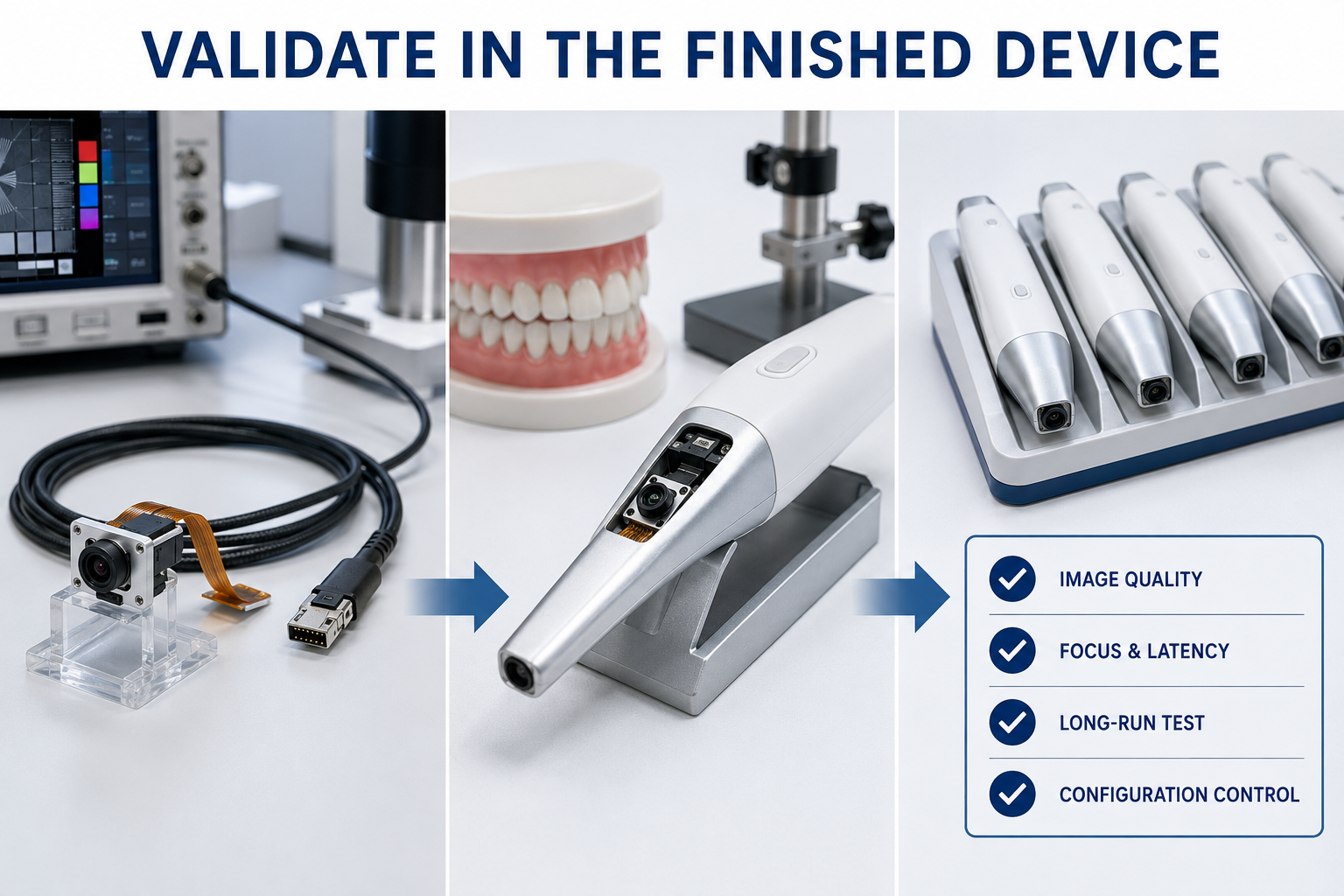
Medical-device manufacturers should explain how the finished product will be operated, cleaned and maintained.
If the device is regularly cleaned or disinfected, the enclosure, sealing structure, optical window, cable and exposed materials must be evaluated against the intended process.
A standard camera module should not automatically be described as waterproof, sterilizable or resistant to disinfectants unless these characteristics have been specifically designed and validated.
Important questions include:
These requirements should be communicated before the structure and materials are finalized.
Medical and healthcare equipment may have a longer product lifecycle than ordinary consumer electronics. Maintaining configuration and image consistency is therefore especially important.
Before mass production, the buyer and supplier should confirm:
Critical components should not be replaced without evaluation and customer approval. Clear version control helps prevent differences between prototypes, validation samples and production units.
A camera module is normally one component within a larger medical system. Using a particular module does not by itself make the finished product approved, compliant or certified as a medical device.
The finished-device manufacturer must determine the applicable classification, risk controls, testing and documentation based on the product’s intended use and target market.
For example, US requirements vary according to device classification and intended use. ISO 13485 addresses quality-management systems for medical-device organizations. Requirements relating to medical electrical equipment may also need to be evaluated depending on the finished product.
A camera-module supplier can support component information, technical documentation, inspection records and product testing. Final regulatory claims and compliance decisions should be reviewed by the device manufacturer and qualified regulatory professionals.
Useful references: FDA Overview of Device Regulation and ISO 13485.
To receive a more suitable recommendation, provide:
Complete project information helps reduce unsuitable samples and repeated modifications.
Krieer is a Shenzhen-based camera manufacturer with more than 18 years of experience in camera modules and customized imaging solutions.
We support medical and healthcare equipment projects with:
Before recommending a solution, our team evaluates the imaging target, working distance, lighting, installation space, interface and host platform.
Choosing a camera module for a medical device requires balancing optical performance, mechanical design, platform compatibility, reliability and project-specific compliance requirements.
Resolution is only one part of the decision. Working distance, FOV, focus, color reproduction, illumination, latency and production consistency may have a greater effect on performance inside the finished device.
The best approach is to define the application first, test samples in the real equipment and lock the approved hardware and firmware configuration before mass production.
If you are developing medical or healthcare equipment, send Krieer your application, working distance, FOV, module-size limit, interface, host platform and estimated quantity. Our engineering team can help evaluate a suitable camera module solution before prototyping.


